






background

Simply Wild Demo Play In Netherlands

Test the Simply Wild playing style in practice mode, discover features and only then switch to real money in Netherlands.

Simply Wild
Simply Wild

Why Simply Wild Demo In 2026 Is So Useful

A trial round is the fastest way to understand if a game suits you, without having to immediately make choices about budget or payment method. Imagine that after a busy workday you just want to spin for a while to feel how often combinations fall and how fast the pace is - then you don't want to set everything up first. In a practice mode, you can calmly click, go back, try again and learn to read the game flow.

What you mainly gain is clarity. You see where the betting buttons are, how to adjust the number of lines or play values (if that option is available), and how notifications appear on the screen. You also get to know your own habits: do you play impulsively, do you increase too quickly, or do you take breaks? By testing this first, you will make fewer silly mistakes later.

In addition, it helps you manage expectations. Many players think that after ten minutes they “know how it works”, but the real difference lies in details: what happens with a small win, how often do you feel the urge to increase, when do you go on autopilot? If you notice this in a practice session, you can immediately link a routine to it: short sessions, clear stopping moments, and not overshooting on feeling.

All promotional incentive structure is clearly stated in writing and/or via electronic means in an easily understood manner. All codes are accompanied by an explanation of what the code is for, who is eligible to use the code, and how it should be used. As such, players are less likely to be confused about what is required of them in order to receive a reward and how the reward will be applied after receiving it. The promotional incentives provided to participants provide them with time to become familiar with the gaming system's mechanics, their interface, and progress, before deciding how deeply they wish to become involved with this platform. Therefore, players are encouraged to participate in an informed manner, rather than being pressured or tempted to act quickly.

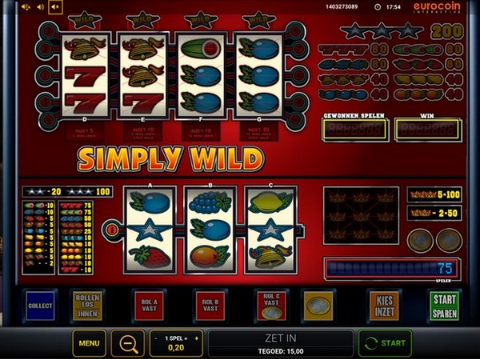
demo image 1
Simply Wild

Top casinos for playing Simply Wild — current list

ALF Casino
ALF Casino
Mafia Casino
Mafia Casino
LeoVegas
LeoVegas
Simply Wild Betway
SG Casino
Simply Wild Betano
Retro Bet
Simply Wild

Availability In Netherlands And Responsible Gaming

Simply Wild is available to players in Netherlands, but availability does not mean you should do everything thoughtlessly. If you are actually going to play, you have to deal with the rules that apply to your region and with age restrictions for adult players. Imagine that you quickly want to make “one deposit” because you just had a nice round in the trial mode - that is exactly when you should slow down and check if your settings are correct.

Start with a simple plan: what is your goal for the session, how long do you want to play, and when do you stop anyway? Many players do it the other way around: they start, win or lose some, and only then set boundaries. That feels free, but it's usually expensive. Smarter is: first boundaries, then play.

Your environment also matters. If you are tired, distracted by messages, or irritated because something isn't working, you are more likely to make impulsive choices. Ask yourself in the middle of playing: “Would I do this now if someone was watching me?” That small check moment takes you out of the tunnel and helps you stick to your agreements.

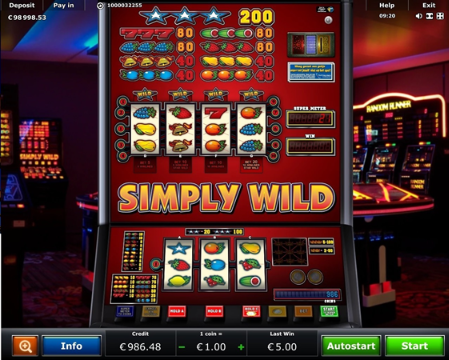
demo image 2
Simply Wild

How to Quickly Start Practicing and Learning

For many players, the threshold is not the game itself, but everything around it: account, settings, security, and the question of whether you should use money immediately. If you handle this properly, it will never feel complicated. Imagine you're on your phone and you only have ten minutes - then you want a route you can repeat every time without searching.

Take it step by step. First, look at the game interface: where is your balance, where do you adjust the bet, how do you start a round, and how do you pause? Then pay attention to notifications: when does information appear on the screen, what does it mean, and how do you close it without missing anything? Finally, practice with rhythm: small bet, a few rounds, short break, another few rounds. This way you learn faster than by clicking for a long time consecutively.

Simply Wild Demo Play Without Stress or Haste

The best practice session is short and focused. If you play for an hour straight, you remember less and you go on autopilot faster. Imagine you just saw a small win a few times in a row - your fingers often automatically want to increase, even if that's not your plan. In practice mode, that's the perfect moment to consciously not increase and see how that feels.

Make it a mini-checklist: 1) start with the lowest comfortable bet, 2) play twenty to thirty rounds, 3) pause and check how you feel, 4) play another short block. In each block, pay attention to one thing: first the buttons, then the pace, then your own tendency to chase. This way you build a routine that you can also use later with real money.

Do you want it to be extra practical? Consciously practice “stop moments”. After each short series, take your hand off the mouse or screen and see if you are still playing with the same intention. That sounds small, but it prevents you from thoughtlessly continuing because the game holds your attention.

When an Account Can Be Useful After All

Sometimes practicing without many steps is enough, but there are times when a profile actually gives you peace of mind. For example, if you switch between devices, want to save settings, or want to easily contact support later, registration can be useful. Imagine you practice on mobile on the go and later want to continue at home - then it's nice if you don't have to search for your settings and preferences again.

Registration is mainly about consistency and security. Choose a strong password, enable extra security where possible, and write down your important settings (such as limits or time limits) for yourself. Many players skip this and only start thinking when there is stress, for example when changing payment methods or when they want to restore their access.

Also consider verification as part of “avoiding hassle later”. You don't have to overdo the details, but it helps to understand that platforms sometimes ask for confirmation before certain functions work smoothly. If you do this calmly when you have time, it feels much less like a blockage.

Quick Checklist for a Neat Profile

Complete your profile “all at once”. Imagine you want to play quickly tomorrow and then you find out you're missing something - that's exactly when you become more impulsive. Carefully fill in basic information, check your contact details, and keep your login secure. In addition, immediately set your preferences: notifications on or off, language, and any limits you want to use by default.

Also plan a fixed routine for sessions: first log in, then check limits, then play. That sounds strict, but it's actually relaxing because you don't have to decide again every time. The fewer choices you have at the beginning, the less likely you are to play by feel.

What You Better Not Do at the Last Minute

Don't wait until you're already in the flow to change settings. Imagine you just had an exciting series and you think “I'll just increase” and at the same time you're going to adjust your payment settings - that's asking for mistakes. Rather change one thing at a time: first settings, then play, not mixed up.

Also avoid messing with multiple tabs or devices at the same time. Many players open everything at once “to compare”, but then lose track. Keep it simple: one screen, one goal, one session.

Simply Wild

From Depositing to Withdrawing Without Chaos

If, after practicing, you decide to play with real money, it's all about control: you want to know what you're doing, why you're doing it, and how to stop. Imagine you make a small profit and immediately want to withdraw “to be safe” - great idea, but only if you know the steps and don't click headlong.

Use a basic order: choose payment method, set limits, make a small initial deposit, play a short session, and then evaluate. Not the other way around. Many players first make a large deposit “for convenience” and then hope they can control themselves. That is usually the wrong order, because then you are already emotionally attached to the amount.

Below is a practical table with choices that players often get stuck on. No promises, but tools to quickly find the right buttons and expectations.

Topic

Useful Choice for Beginners

What to Look Out For

Payment Route

Bank card or direct bank transfer

Check confirmations and your own budget before you pay

Session Limit

Time limit per session

Fits your daily rhythm, not your mood

Budget Limit

Fixed amount per week or month

Keep it separate from “winning back” or “just one more time”

Withdrawal

First small test withdrawal

Expectations remain more realistic, less stress

Identity Check

Arrange this at a quiet moment

Prevents last-minute blockages when you want to withdraw

Support Contact

One channel that you like

Resolved faster if you don't jump between options

Depositing With Clear Limits

A deposit should be a practical step, not an emotional one. If you notice that you are depositing because you are bored or because you want to compensate for a loss, stop for a moment. Imagine you think “I'll add some more, then it will feel fun again” - that is exactly the pitfall where budget disappears.

Rather choose a small starting amount that fits your plan, not your ambition. Make a rule for yourself: one deposit per session or per day, and no exceptions. Do you still want to increase? Then you only do that in a next session, after a break. This way you take out the impulse.

Also pay attention to friction: friction is good. If it takes two extra steps to deposit, that's not a problem but a protective layer. The faster money “comes in”, the faster you unconsciously start playing as if it's not real.

Setting Limits That You Really Stick To

Limits only work if you choose them honestly. A limit that you always want to stretch is mainly frustrating and often leads to strange detours. Imagine you set a limit that is too tight and you get irritated - then you won't play better, you'll push harder.

Make it practical: choose a time limit that fits your day and a budget limit that doesn't feel like a punishment. In addition, set a “cooldown” for yourself: always a break after a session, even if you win. Winning is also a trigger to continue.

Many players also forget that limits are not only about money, but also about attention. If you notice that you click faster, read less, or only wait for the result, then your mental limit has already been reached. Stop then, even if your money limit has not yet been reached.

Handling Withdrawals Calmly and Controllably

Withdrawing is the moment when players often create unnecessary stress. Not because it has to be complicated, but because they only start reading then. Imagine you just want to withdraw and you see a request for confirmation - if you see that for the first time at an emotional moment, it immediately feels like “a hassle”.

Handle it professionally. First check if your details are correct, choose a method you understand, and expect that processing may vary per route. Don't make plans with money that is still on its way; treat it as “unavailable” until it is actually in. This prevents disappointment and impulsive decisions.

And very important: do not continue playing while you have requested a withdrawal, unless you consciously know why you are doing that. Many players then lose track: what is still open, what has already been processed, what is still playable? One step at a time keeps it clear.
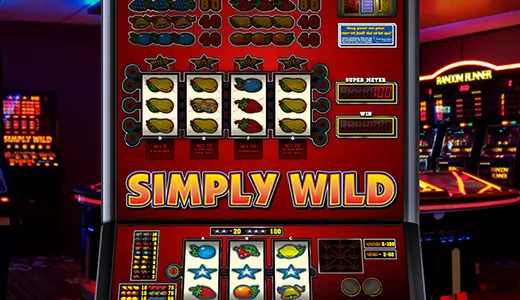
demo image 3

Simply Wild Casino Bonus Codes Activation Process

Simply Wild Casino Bonus Codes Conditions

Understanding the Game: Pace, Features, and Habits

Playing a slot machine seems simple, but your results often depend on your behavior, not on “tricks.” You can train yourself to play more calmly, stop better, and react less emotionally. Imagine you notice that you always speed up when things get exciting – that's not a coincidence, that's a habit. The good news: habits can be changed.

Start with rhythm. Consciously play slowly, watch for notifications, and take mini-breaks. Only then should you test features: automatic rounds, speed settings, or other options the interface offers. The more you speed up, the less you notice what you're doing. And if you don't notice what you're doing, you can't control it either.

Quickly Learning to Read Symbols and Notifications

In every game, there's a “language”: symbols, effects, and small notifications that tell you what's happening. Many players ignore this and only look at wins or losses. Imagine you dismiss a notification and miss an explanation about a feature – then you play for an hour without understanding why something sometimes works differently.

Take five minutes to consciously read. Find where the game info is, see how combinations are explained, and pay attention to what changes when you adjust your bet. Even if you don't want to remember details, it helps to understand the structure: what is basic, what is extra, and when does it happen.

Make it concrete: choose one thing to remember per session. Today: where do I find the game info. Next session: how do I safely adjust my bet. This way, you build understanding without it feeling like studying.

Using Automatic Rounds Without Losing Control

Autoplay can be useful, but it also removes the brake. If you're not careful, you'll play longer than planned because your eyes keep following while your hand does nothing. Imagine you get a message and let it continue – before you know it, your session is over without you making conscious choices.

If you use autoplay, attach rules to it. Set a low number of rounds, set a pause after each series, and check after each stop if you want to continue. Never use it to “get back faster” after a loss. That's the situation where people overshoot the most.

A simple trick: set a timer separate from the game. Not as a punishment, but as a mirror. When that timer goes off, you stop for a moment and decide again. That extra decision is precisely what breaks impulse.

Mobile Gaming with a Calm Setup

Playing on mobile is comfortable, but also riskier in terms of distraction. You're quicker to sit on the couch, you scroll, you switch between apps. Imagine you're playing in bed and you're half-tired – then you click faster, read less, and forget breaks.

Make mobile gaming conscious: mute notifications for a while, place your phone steadily, and play for shorter periods than you would on a desktop. Also, use the interface calmly: don't tap haphazardly, but wait a second, see what happens, and only then tap. That one-second rhythm makes your game much more conscious.

And if you find that the screen feels too small to follow everything, don't force it. Rather choose a moment when you have a larger screen or limit yourself to practicing and learning, not to longer sessions.

Solving Small Technical Hiccups Without Frustration

Nothing ruins focus as quickly as a button that doesn't respond, a screen that freezes, or settings that seem “gone.” Imagine you're just getting into your rhythm and the game stutters – your first reaction is often irritation, and irritation leads to impulse.

Then do it simply: close, restart, check your connection, and see if you're in a quiet environment (Wi-Fi, battery, no heavy apps). Don't change settings and continue playing at the same time. And most importantly: don't try to “make up for losses” because your session started messy. A messy start is precisely a signal to play shorter or stop for a while.

If it happens more often, use support when you are calm. Clearly explain what you see and what you have already tried. The calmer you describe it, the faster you usually get a useful answer.

Support, Privacy, and Security for Players in 2026

In 2026, players expect everything to be fast, but speed isn't always the most important thing. You primarily want clarity: where to ask for help, what to share and not share, and how to keep an overview of your settings. Imagine you have a question about a transaction and you panic because you don't know where to start – then it helps to know in advance where to find support and what information you can have ready.

Keep your communication practical. Note for yourself what happened, on which device, and what steps you took. Avoid vague texts like “it's acting weird”; rather describe “I pressed X, then Y happened.” That saves back-and-forth.

Privacy is also behavior. Don't share unnecessary info, don't leave your screen open on shared devices, and log out when you're done. It's simple, but many problems arise from convenience. A few fixed habits make it safe without feeling burdensome.

Using Time-Out and Self-Exclusion Smartly

Time-out and self-exclusion are not for “problems,” but for control. See it as a normal tool, like a pause button on your music. Imagine you notice you're too often thinking “just one more round” – that's precisely when a time-out helps you step out of the flow without arguing with yourself.

Make it concrete: choose a break period that suits your rhythm and stick to it. Use that break to do something else that truly distracts: walking, showering, eating, or a conversation. Not “just social media,” because that keeps your brain in the same stimulated state.

And be honest: if you need breaks more often, that's not a failure. It's information. Then you can adjust your playing style: shorter sessions, fewer stimuli, or more often just practicing without money. This way, playing remains something you control, not something that controls you.

FAQ

How can I practice for free without using real money?

Start with practice mode and treat it as a training session: play in short blocks, take breaks, and choose one goal per block (e.g., learning the betting buttons or feeling the pace). Imagine you only have ten minutes – then don't play until it gets “exciting,” but stop precisely on time so you maintain control. It often helps to stop after twenty to thirty rounds and ask yourself why you want to continue. This way, practicing becomes a routine, not something you do thoughtlessly.

What steps help to avoid impulsive play?

Make two agreements with yourself beforehand: a time limit and a budget limit, and link a real stopping action to them (close the app, put the phone away, stand up for a moment). If you notice you're clicking faster or only waiting for the result, that's a sign that your mental limit has already been reached. Usually, players do the opposite and only set limits after things go wrong, but a small ritual at the beginning prevents you from getting into a “just one more time” loop. If necessary, set a separate timer and decide again as soon as it goes off.

What should I check before making a deposit?

First, check if you're playing when you're clear-headed: not tired, not irritated, and not because you want to compensate for something. Then look at your limits and set them at a level you can truly maintain, not an ideal. Imagine you just had a good streak and you want to increase immediately – then take ten seconds to see if your deposit fits your plan. A small starting step often works better than starting big right away, because then you feel less pressure and make calmer decisions.

Why does withdrawing sometimes feel stressful and how do I stay calm?

Because many players only start reading when they already feel emotion: joy, relief, or impatience. If you want to stay calm, treat withdrawing as administration: one step at a time, check details, choose a method you understand, and don't make plans with money that's still on its way. Imagine you see an extra confirmation – don't see that as resistance, but as a normal part of the process. By doing it at a calm moment, you prevent yourself from clicking out of frustration.

How do I use a time-out in a way that truly helps?

Use it as soon as you notice you're starting to convince yourself instead of deciding. This usually comes with phrases like “I'll stop after this round” or “I just want to get this back.” Imagine you notice your body is already restless and you're clicking faster – that's a perfect moment to activate a break and do something that truly shifts your attention. Choose a break period that fits your day and see it as a standard tool, not an emergency brake; this makes it easier to actually use it when you need it.

What mistakes do players often make when playing on mobile and how can I avoid them?

The biggest mistake is playing while distracted: notifications, multiple apps, or half-asleep on the couch. This makes you click faster, read less, and forget breaks. Imagine you want to do “just a few quick rounds” and you get messages in between – then it's smarter to first mute notifications and plan a short, clear session. Be conscious: play shorter than on desktop, pause more often, and stop as soon as you notice you're on autopilot.

Play Now
🇬🇧 English